Traffic Rider vs Real Bike Racing | An Ultimate Bike Adventure
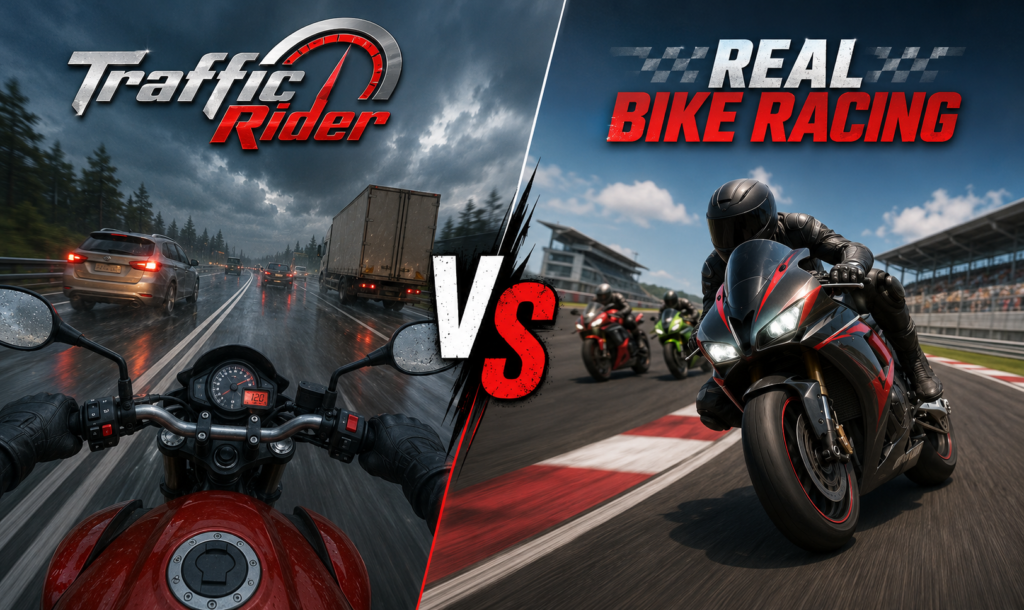
Mobile racing games now attract millions of players across the United States. Many gamers want fast action with smooth controls and realistic visuals. That demand pushed motorcycle titles to a new level. Two games stand above the rest. Traffic Rider and Real Bike Racing continue to dominate the category because both deliver speed, challenge, and strong replay value.
This detailed guide compares gameplay, graphics, controls, upgrades, and overall riding feel. The goal is simple. Help you choose the right experience for your style. Some players enjoy realistic highways with moving traffic. Others prefer closed tracks with direct competition. Both games serve different audiences. That difference matters more than graphics alone.
Overview of Traffic Rider & Real Bike Racing
Traffic Rider focuses on immersion and road survival. The game places players behind the handlebars in a first person view. Cars move naturally across busy roads. Speed increases tension with every mile. Long highway routes create a strong sense of realism. The game also includes career missions, weather shifts, and dynamic lighting. These details improve engagement during long sessions.
Real Bike Racing takes another path. It centers on quick races and aggressive rivals. Players race around tracks instead of highways. Every corner demands fast reactions. The pace feels sharper and more arcade driven. That design appeals to players who enjoy instant action. The game also runs smoothly on mid range Android devices which expands accessibility for casual gamers.
| Feature | Traffic Rider | Real Bike Racing |
|---|---|---|
| Riding Style | Highway simulation | Track competition |
| Camera View | First person | Third person |
| Main Focus | Traffic survival | Rival racing |
| Offline Support | Yes | Yes |
| Gameplay Pace | Steady and immersive | Fast and aggressive |
Reliable gaming platforms such as IGN and GameSpot often highlight realism, controls, and replay value as key factors in racing game quality. Both titles perform well in those areas.
Features of Traffic Rider & Real Bike Racing
Features shape long term player interest. Strong mechanics keep riders engaged after the first race ends. Both games include unlock systems, upgrades, and mission progression. However, each title uses those systems differently. Traffic Rider rewards patience and precision. Real Bike Racing rewards aggression and quick reflexes.
Sound design also separates these games from average mobile racers. Traffic Rider uses realistic engine audio recorded from actual motorcycles. That creates deeper immersion during highway rides. Real Bike Racing delivers louder effects designed for excitement and speed. Both approaches work well because they match each game’s identity.
Gameplay
Traffic Rider creates tension through movement and timing. Cars shift lanes unexpectedly. Trucks block visibility. High speeds reduce reaction time. That pressure keeps gameplay fresh during every ride. The first person camera also strengthens realism. Players feel connected to the road rather than detached from it.
Real Bike Racing focuses on direct competition. Opponents stay close during races. Sharp corners punish mistakes quickly. Tracks encourage risky overtakes and fast acceleration. That structure creates shorter but more intense sessions. Players who enjoy instant action often prefer this style because races feel dramatic from start to finish.
A report from Android Authority noted that responsive controls strongly affect retention in mobile racing games. Both titles succeed because steering feels smooth and predictable. That matters during high speed moments where accuracy decides victory.
| Gameplay Element | Traffic Rider | Real Bike Racing |
|---|---|---|
| Environment | Open highways | Closed circuits |
| Main Challenge | Avoid collisions | Beat rivals |
| Mission Style | Endless progression | Competitive races |
| Riding Feel | Realistic | Arcade inspired |
Bike Customization
Customization keeps progression rewarding. Traffic Rider includes a deeper upgrade path. Players improve speed, handling, and braking over time. New motorcycles unlock after completing missions. Each bike changes the riding feel slightly. Faster bikes demand better control which adds challenge naturally.
Real Bike Racing offers simpler customization. Upgrades focus mainly on race performance. Players improve acceleration and top speed before harder events. While the system feels lighter, it still supports progression well. The game prioritizes fast gameplay over detailed mechanics.
Visual design also deserves attention. Both titles feature detailed superbikes inspired by real machines. Chrome finishes, racing decals, and bright headlights improve immersion. Players often stay engaged longer when motorcycles look distinct and powerful.
Multiplayer Experience
Traffic Rider mainly supports solo progression. However, global leaderboards add competitive value. Players chase higher scores through cleaner rides and longer survival runs. That system motivates improvement without requiring live multiplayer access.
Real Bike Racing creates stronger competitive pressure through advanced AI racers. Rivals block lanes, overtake aggressively, and defend positions during tight races. This creates a multiplayer like atmosphere even during offline sessions. Many players enjoy this approach because races remain challenging without internet dependence.
Offline functionality also increases convenience. According to Google Play Games Blog many mobile users prefer games that work during travel or unstable connections. Both titles support offline play well which improves accessibility across different situations.
Final Verdict
Traffic Rider and Real Bike Racing both succeed for different reasons. Traffic Rider delivers realism, atmosphere, and long highway sessions filled with tension. The game rewards focus and precision. Players who enjoy immersive riding often choose this experience.
Real Bike Racing focuses on speed and competition. Every race feels energetic and direct. The aggressive pacing appeals to players who want quick excitement without long setup periods. Both games remain strong choices for motorcycle racing fans. The better option depends on your preferred style, not popularity alone.